“Reverse Discrimination” Gets Its Day in Court: Ames v. Ohio DYS, the Death of a Dumb Rule, and the Coming Stampede of White-Grievance Lawsuits
When Even the Supreme Court Says “This Rule Is Stupid”
Picture this: You’re a white guy who gets passed over for a promotion. You think it’s because of your race. You sue. But wait! Before you can even get your day in court, you have to prove your employer is some kind of unicorn, a “rare employer who discriminates against the majority.” Meanwhile, your Black colleague with a similar complaint walks straight through the courthouse doors, no magical unicorn hunting required.
Sound fair? Of course not. And on June 5, 2025, the Supreme Court finally said what everyone with a functioning brain already knew: this made-up rule was garbage.
The case that killed this judicial monstrosity? Ames v. Ohio Department of Youth Services . The plaintiff? Marlean Ames, a straight white woman who inadvertently became the poster child for “reverse discrimination” lawsuits. The vote? 9–0. When Sonia Sotomayor and Samuel Alito sign the same opinion, you know the lower courts really screwed up.
Title VII: So Simple Even a CEO Could Understand It (But Didn’t)
Let’s start with the basics. Title VII of the Civil Rights Act tells employers they cannot treat any individual worse because of race, color, religion, sex, or national origin. Notice that word “any”? It means what it says: the whole species, whether you’re Black, white, gay, straight, Jedi, or Sith. The Court made this crystal clear back in 1976 with and hammered it home again in 2020’s McDonald v. Santa Fe Trail ruling that protected LGBTQ workers.
Simple, right? Discrimination bad. For everyone. Full stop.
But leave it to federal judges to complicate things.
How to Invent a Legal Speed Bump in Three Easy Steps
Think about that for a second. Before you could even argue your case, you had to establish that your employer was basically a discrimination unicorn. Good luck with that.
The Sixth and Tenth Circuits thought this was brilliant and copied the rule. Other circuits looked at it and said, “Nah, we’ll stick with the actual law.” The result? A patchwork system where your ability to sue for discrimination literally depended on your ZIP code. A white plaintiff in Ohio faced a Mount Everest of proof that the same plaintiff in Illinois could skip entirely.
For decades, critics from across the political spectrum called this rule what it was: nonsense on stilts. Even conservative judges couldn’t defend it with a straight face. Judge Raymond Kethledge warned in 2023 that it probably violated equal protection because, get this, it literally treated people differently based on their race. You know, the exact thing Title VII prohibits.
Enter Marlean Ames: Accidental Culture War Icon
Marlean Ames didn’t set out to become the face of “reverse discrimination” litigation. She just wanted to keep climbing the ladder at Ohio’s Department of Youth Services, where she’d worked for two decades. But in 2019, things went sideways. She applied for a Bureau Chief position. The job went to a lesbian colleague. Then Ames got demoted from her administrator role, replaced by a gay man in his twenties.
Makes sense, right? Not to the lower courts. Both the trial court and the Sixth Circuit tossed her case faster than week-old sushi. Why? She failed the “background-circumstances” test. She couldn’t prove her employer was one of those mythical creatures that discriminates against straight people.
So she appealed to the Supreme Court, which agreed to settle this mess once and for all.
The Decision: When Nine Justices Call BS
On June 5, 2025, Justice Ketanji Brown Jackson wrote for a unanimous Court. The opinion reads like a judicial eye-roll, dripping with polite incredulity that lower courts ever thought this made sense.
The key points were devastatingly simple:
Jackson’s money quote cuts right to the heart of it: “Title VII makes it unlawful to discriminate against any individual… There is no exception for plaintiffs from historically favored groups.”
Monday Morning in America: Everything Changes
So what happens now that this judicial zombie is finally dead?
First, every federal circuit has to play by the same rules. No more forum shopping, no more geographic lottery. A discrimination plaintiff in Ohio gets the same shot as one in California.
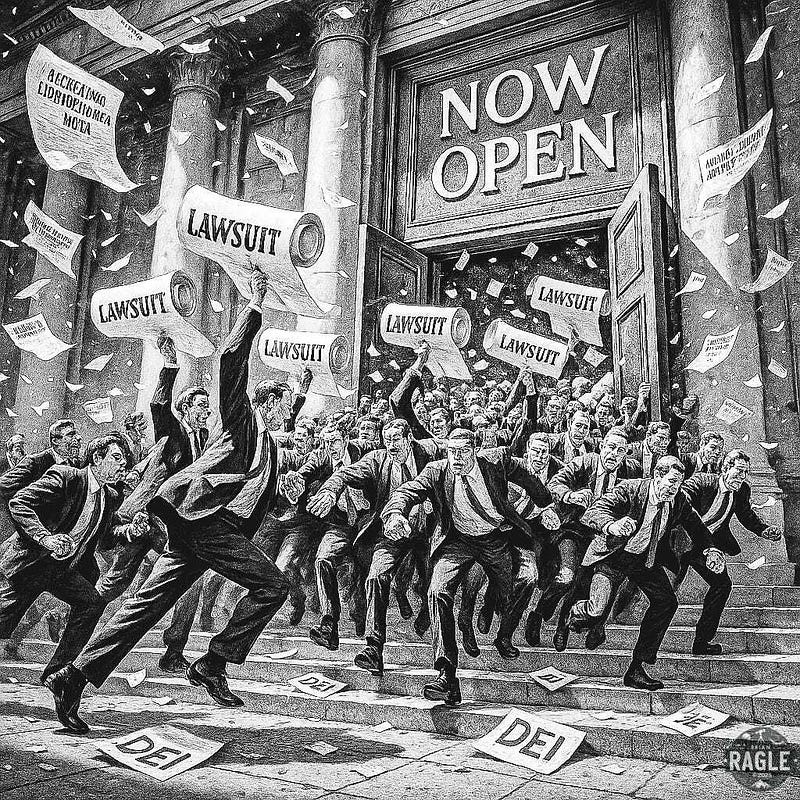
Second, and this is where things get spicy: the courthouse doors just swung wide open for “majority” plaintiffs. Jones Day’s client alert practically vibrates with excitement, telling corporate clients that “opens the courthouse doors” and warning them to audit their HR practices yesterday. goes further, warning that any hiring or promotion system that gives “bonus points for under-represented groups” now carries “significant litigation risk.” ArentFox Schiff
Translation: If your company has been winking at federal law with “diverse candidates strongly encouraged” job postings, your legal department is about to earn its keep.
Third, conservative legal activists can barely contain their glee. Jenner & Block’s 2025 outlook report doesn’t mince words: anti-DEI crusaders will “ramp up” their courtroom offensive, “emboldened by the Trump administration.”
The Perfect Storm: Trump 2.0 Meets Project 2025
Here’s where timing becomes everything. This ruling didn’t drop into a vacuum. It landed smack in the middle of a conservative legal revolution.
Remember Project 2025? That 900-page doorstop from the Heritage Foundation that reads like fan fiction for people who think the 1950s were too progressive? It calls for purging DEI from every federal cubicle and replacing civil rights staff with what can only be described as culture-war commissars. The calls it a blueprint for “legalized discrimination,” which seems about right. Center for American Progress
Meet Your New Litigation All-Stars
Christopher Rufo didn’t just write about ending DEI; he published a literal how-to guide in City Journal called “The Coming Fight to Abolish DEI.” Subtle as a sledgehammer, effective as one too.
Russell Vought and his Center for Renewing America are churning out model legislation faster than a legislative sausage factory, each bill designed to ban DEI in hiring, contracting, education, and probably lunch menus.
Stephen Miller’s reads like a who’s who of corporate America’s nightmares. Disney? Sued. Macy’s? Sued. IBM? Sued. United Airlines? You guessed it. Their “Dismantling DEI” webpage looks like a trophy room.
Edward Blum , the legal mastermind who killed affirmative action in college admissions, just scored an Eleventh Circuit injunction against the Fearless Fund for having the audacity to limit venture grants to Black women founders. If you’re keeping score at home, that’s two landmark victories in two years.
From Campus to Cubicle: The Dominoes Fall
Corporate America saw the writing on the wall and started heading for the exits. Target, Meta, Amazon, Ford, Lowe’s, and a dozen other household names have quietly dialed back their DEI programs. Some eliminated entire departments. Others just scrubbed the acronym from their websites and hoped nobody would notice.
Red state legislatures, never ones to miss a culture-war opportunity, have moved from banning DEI in public universities to eyeing private employers. Because nothing says “small government conservative” like telling businesses how to hire people.
Why Ames Matters: The Accelerant on the Fire
This case matters for four reasons:
First, it gives plaintiffs oxygen. No more suffocating at the prima facie stage because they can’t prove their employer is a discrimination unicorn. They get their day in court, same as everyone else.
Third, timing is everything. With the Trump administration treating DEI like a four-letter word (which, technically, it is), federal agencies won’t be rushing to defend diversity programs in court. More like rushing to dismantle them.
Reality Check: What This Doesn’t Mean
What it means is everyone plays by the same rules. You still need evidence: emails, patterns, managers who can’t keep their mouths shut. The bar hasn’t been lowered; it’s just the same height for everyone now.
The Backstory: How We Got Here
This avalanche started with Students for Fair Admissions v. Harvard in 2023, when the Supreme Court nuked race-conscious college admissions. If closed the front door on affirmative action in education, just opened the side door for reverse-discrimination suits in employment.
Combine both rulings with the Trump administration’s executive orders and Project 2025’s wholesale assault on anything with “equity” in the title, and you’ve got yourself a full-blown legal revolution. Or counter-revolution, depending on your perspective.
Practical Advice for the Legally Curious
For Employers Who Enjoy Not Being Sued:
For Workers Who Think They’ve Been Reverse-Discriminated Against:
For Workers Still Facing Good Old-Fashioned Discrimination:
The Big Picture: Buckle Up
did what it had to do: restore Title VII’s plain meaning and euthanize a rule that should have died in the Reagan administration. But timing, as they say, is everything.
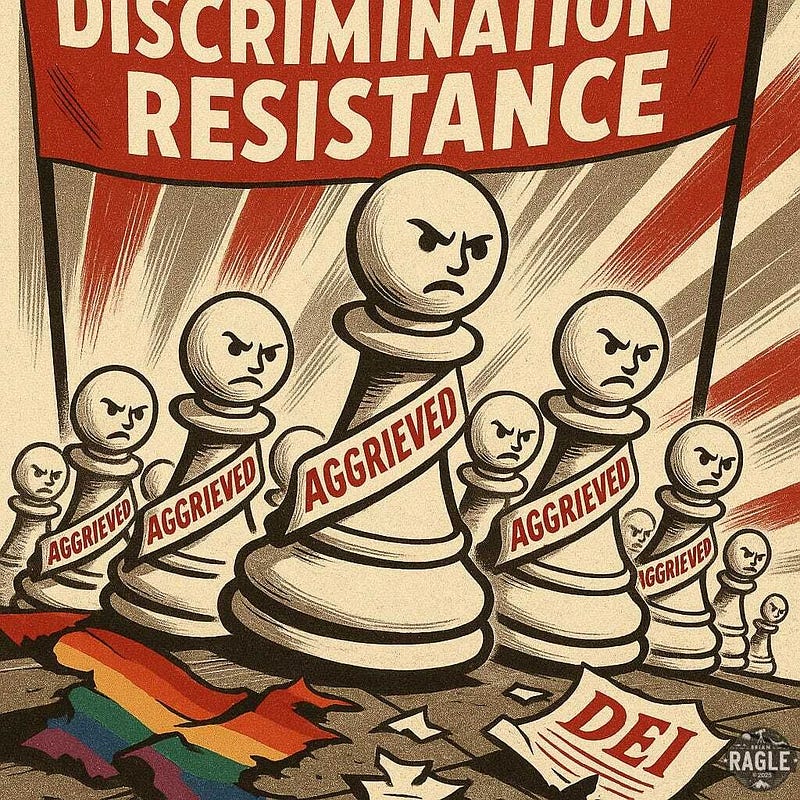
This decision arrives at the exact moment when an anti-DEI administration, a Heritage Foundation battle plan, and a well-funded network of conservative litigators are locked and loaded. Expect headlines like “Straight White Man Sues Google Over Pride Event” within approximately fifteen minutes.
The next phase of America’s eternal argument about fairness, discrimination, and who gets to claim victimhood just shifted venues from campus quads to office parks. Everyone from DEI coordinators to Fox News hosts is scrambling to update their talking points.
One thing’s certain: the federal courts are about to get very, very busy. Whether that’s good or bad depends entirely on which side of the lawsuit you’re on. But hey, at least now everyone gets to play by the same rules. That’s progress, right?
Breathe deep; that’s the scent of fresh-poured kerosene. SCOTUS just stoked the reverse-bias dumpster fire and strolled off whistling.
Originally published at https://vagabondvisions.beehiiv.com.
Leave a Reply