Let’s be blunt: the future of artificial intelligence isn’t chatbots, it’s agents. Not in the James Bond sense (unless he’s been fine-tuned on GitHub), but in the increasingly autonomous, goal-driven, task-completing sense. Generative AI and LLMs like GPT-4, Claude, and Gemini are powerful, but their real-world utility has been largely reactive and isolated. The next leap is not just in making them better talkers but making them doers.
From Chatbots to Cognitive Colleagues
The difference between current LLMs and AI agents is agency, literally. A chatbot can give you a nice meal plan or write a business email. An AI agent, on the other hand, will crawl your inbox, draft the reply, schedule the meeting, and reschedule your dentist appointment when it realizes the conflict.
Agents are the logical progression of LLMs. Instead of just outputting text, they take action in software and physical environments. Think AutoGPT, BabyAGI, or Devin from Cognition Labs: these systems can run iterative tasks, make decisions, adapt to errors, and work toward complex goals across apps, APIs, and devices.
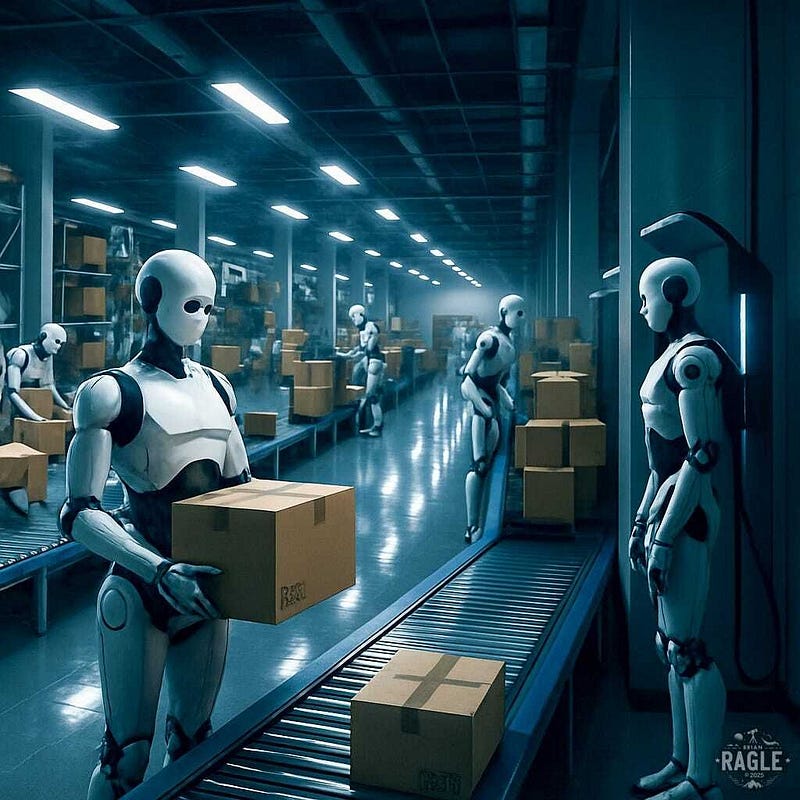
But agents aren’t limited to the digital realm. They’re also showing up in physical form: AI-driven robotics. These embodied agents can perform warehouse logistics, clean buildings, repair infrastructure, or even manufacture other machines. Picture a Boston Dynamics-style robot equipped with a multimodal LLM, capable of navigating real-world environments, manipulating objects, and troubleshooting in real-time. The software is evolving brains; now we’re just giving them bodies.
The Great Panic: Jobs, Schmobs
Whenever the topic of AI taking jobs comes up, someone inevitably says, “But we said the same thing about ATMs and factory robots, and look, we still have jobs!”
Yeah. We also have more people working longer hours for less pay, no job security, and a gig economy that treats human beings like disposable API endpoints.
This is not sustainable. Nor is it desirable.
The End of Labor As We Know It (And That’s Okay)
As agent-based automation scales, productivity will skyrocket-but not because of humans. Software will build software, AI will generate content, virtual assistants will manage logistics, and eventually, robots will build and repair the machines that run it all.
Go one step further, and you reach Autarkic Automation : a company, nation-state, or AI colony that requires no external human labor or imports to function. It mines its own minerals, powers its own grids, builds its own machines, and maybe even builds its own spaceships. It’s the endgame of capitalist automation, total self-reliance through artificial labor.
Capitalism Can’t Survive Its Own Success
Capitalism is predicated on scarcity: labor is commodified, and wages are paid in exchange for time and effort. But when machines can do it all cheaper, faster, and without coffee breaks, human labor becomes economically obsolete.
Here’s the uncomfortable truth: capitalism requires a slave class. Always has. Whether it was literal chattel slavery in early American plantations, the brutal wage slavery of 19th-century factories, or the debt-trapped precariat of the gig economy, the system only functions when there’s a group of people forced to work just to survive. If you can’t afford to quit your job without starving or losing your home, congratulations: you’re not free, you’re just a better-dressed serf.
Automation threatens to pull the rug out from under that foundational exploit. If machines can provide the goods and services people need, without requiring human labor, then the entire rationale for wage-based survival collapses. And when labor is no longer necessary, capitalism has no moral justification for continuing to extract time, sweat, and energy from people. But instead of celebrating that, capitalism panics …because without labor to exploit, there’s nothing left to squeeze.
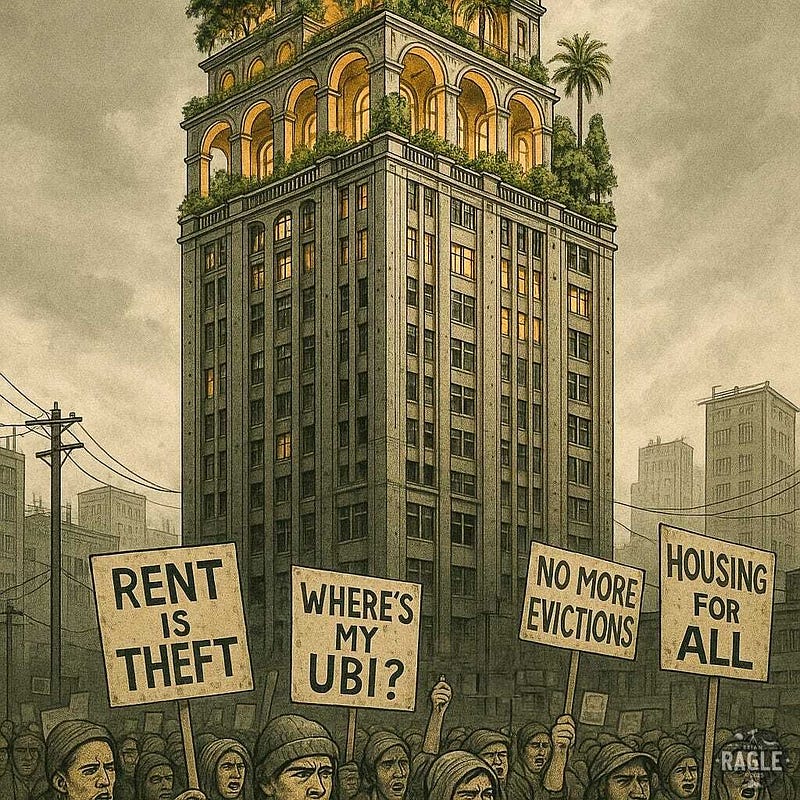
This creates a fatal contradiction. If people have no jobs, they have no income. If they have no income, they can’t buy anything. If no one buys anything, markets collapse.
You see the problem.
The tools are here to kill the need for exploitative labor. But the system won’t let them, because capitalism, at its core, doesn’t know how to survive a world where no one has to suffer to make a buck.
Three Roads Diverge in a Silicon Dystopia
There are only a few plausible outcomes as automation eats the labor economy:
Which future we get depends less on tech and more on policy, values, and whether people stop being afraid to imagine better.
But What Will People Do All Day?
This question is always asked with a tinge of panic, as if idle humans are one bad Tuesday away from Mad Max. The reality? Most people already hate their jobs. Given freedom, they create. They explore. They raise kids, start podcasts, build stuff, write music, volunteer, learn languages, tend gardens, invent games, chase dreams.
Take away the existential threat of poverty, and you’ll be amazed what people can do.
Conclusion: Embrace the Agent Uprising
We are not on the brink of mass unemployment because of AI agents. We are on the brink of mass emancipation.
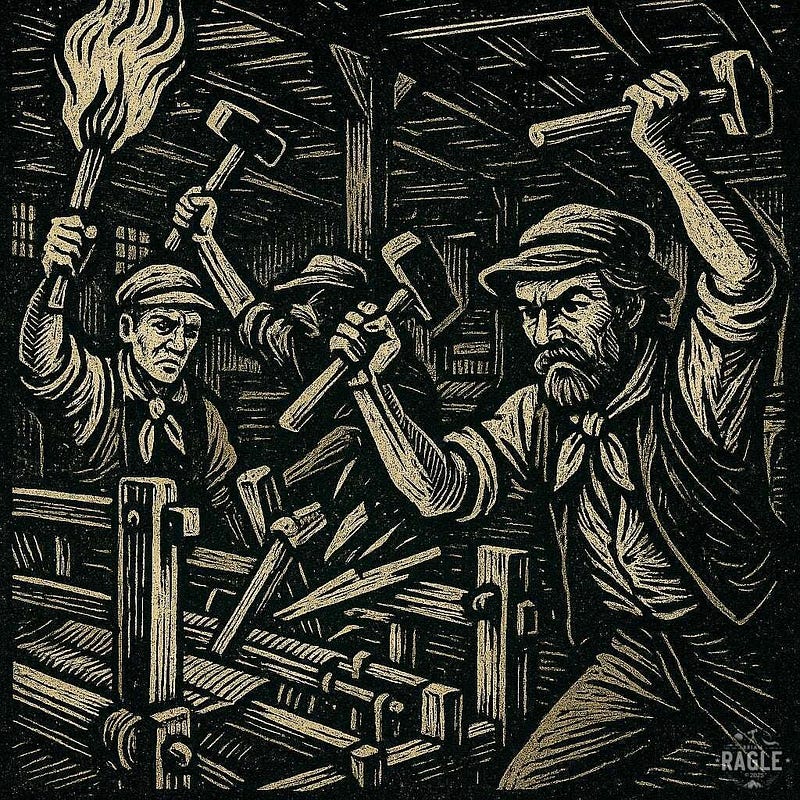
And to understand just how long this tension has existed, we need only look back to the early 19th century and the original boogeymen of automation: the Luddites. Far from being ignorant technophobes, the Luddites were skilled textile workers in England who smashed industrial looms, not because they feared technology, but because they saw it being used to undercut wages, deskill their labor, and consolidate power in the hands of factory owners. The looms weren’t inherently evil; it was the economic system weaponizing them against the people that sparked revolt.
The Luddites understood something we still struggle with today: automation is only a threat when it’s wielded without justice. When new technology is used not to liberate, but to control …when it serves profit over people …that’s when resistance becomes necessary.
So if you find yourself fearing the AI revolution, don’t blame the agents. Blame the owners. The goal isn’t to smash the machines; it’s to seize the benefits.
The real question isn’t how to stop the bots from taking our jobs. It’s how to stop billionaires from hoarding the benefits.
AI agents are here. The labor market won’t survive them. That’s not a crisis. That’s a turning point.
Want to talk about it? Leave a comment below or yell at the nearest Roomba. Either way, the future’s already clocked in.
Originally published at https://vagabondvisions.beehiiv.com.
Leave a Reply