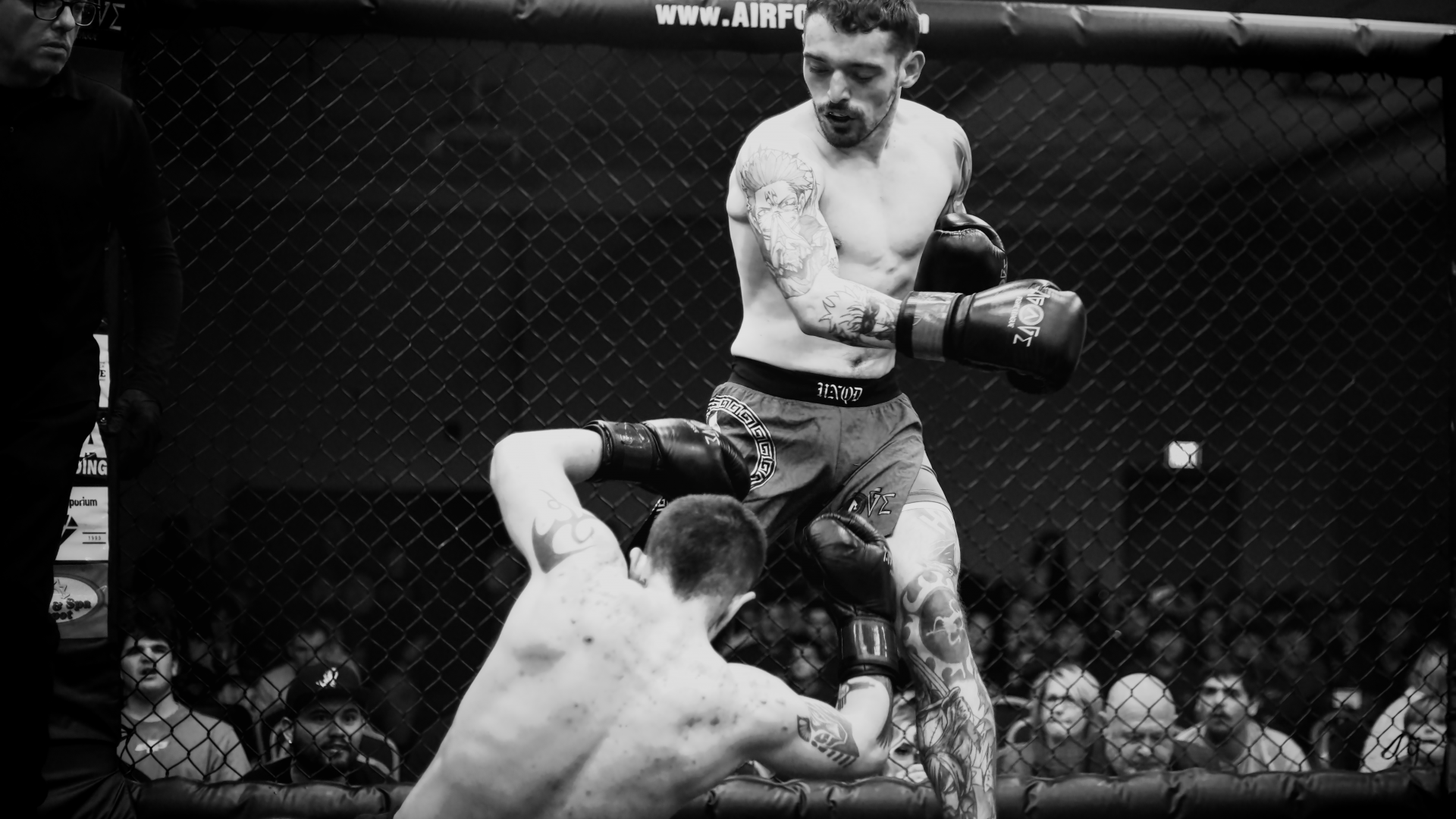
Neil Leifer made the photograph in 1965. May 25th, Lewiston, Maine, one minute and forty-four seconds into the first round. Ali standing over a prone Sonny Liston, screaming at him to get up, daring him to try it again, every line of his body a declaration that the question had been answered.
I didn’t know I was going to make that photograph in a convention center in Cookeville sixty years later.
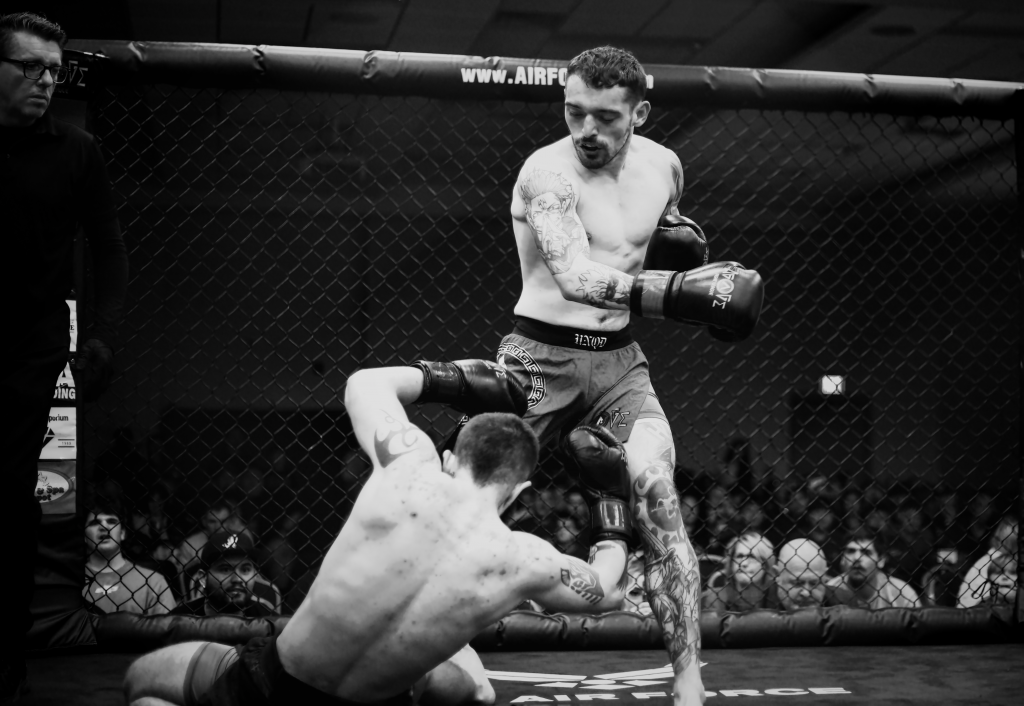
The standing fighter looks down at the one on the ground with an expression I have spent several days trying to read. It isn’t triumph exactly. It isn’t cruelty. It is something more private than either: the face of someone who has just discovered something about themselves that they will carry home tonight and not fully understand until sometime next week.
The fallen fighter has his hand in the air. He is not finished. He is deciding.
This is the oldest image in the sport, older than the sport itself, older than photography by about three thousand years. The one standing. The one on the ground. The moment between the question and the answer. We have been making this picture since the first two people in the history of the species discovered that certain questions can be settled with the body.
We haven’t stopped needing to make it.
Leave a Reply